A First Visit to a Rugby Ground: What to Notice Between Plays
A first visit to a rugby ground is easier to follow when you use its markings, officials and crowd sounds as clear cues for what to watch next.
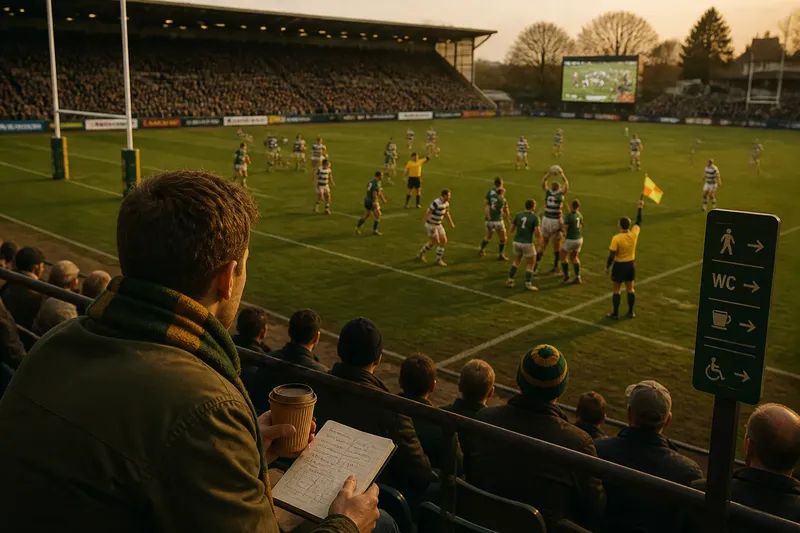
You settle into your seat, hear the crowd rise as the teams come out, and notice how quickly the pitch fills with movement. On a first visit to a rugby ground, start with the visible landmarks: the posts, the goal lines and the touchlines. They give you a way to follow where the match is happening without trying to decode every collision.
Keep a few simple cues in mind: the direction of attack, the referee’s signals and the crowd’s changing attention. Together, they make the ground easier to read from the stands.
Read the markings
Before kickoff, look across the whole field. The touchlines mark the sides, the goal lines mark the ends of the playing area, and the in-goal areas lie beyond the goal lines. The posts are the clearest landmarks at either end. You do not need to memorize every painted line; first, distinguish the field from the in-goal areas and the space outside the boundaries.
Find the halfway line and use it to orient yourself. Note which posts each team is attacking, then keep that direction in mind as play moves. If a stand, roof support or group of spectators blocks part of your view, choose a visible patch of field and use a nearby marking as your reference.
The referee is another useful reference point. Watch where the official moves and look for clear signals when play stops. You may not hear every explanation, but the signal and players’ response often show that a decision has been made.
Track boundary calls
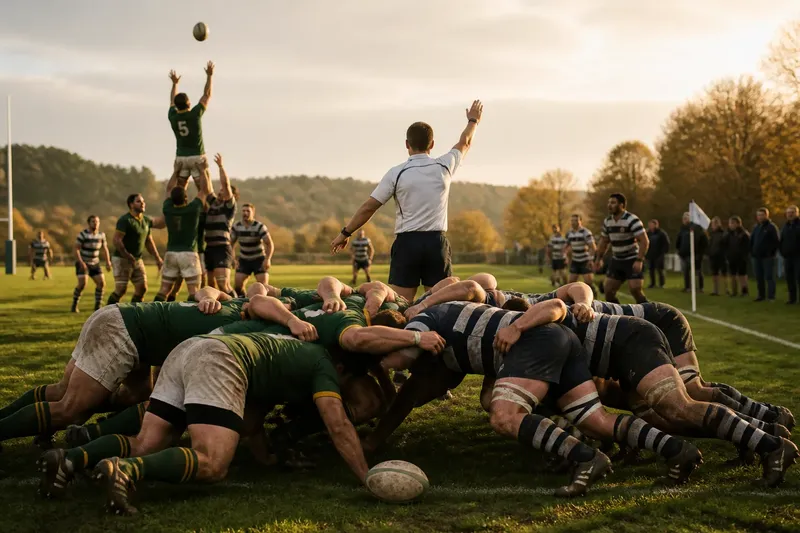
When play reaches a touchline, watch the assistant referee as well as the players. The assistant referee’s flag can signal that the ball has gone into touch. What happens next depends on how it reached touch and on the relevant laws; a lineout is one possible restart, not an automatic result of every ball going out.
Notice the officials’ signal and the players’ arrangement before deciding what kind of restart is taking place. If the details are hard to see, follow the referee and assistant referee as play resumes rather than guessing from the location alone.
Say you are seated near one side of the field and the ball crosses the touchline. You see the assistant referee raise a flag, then notice the referee indicate a lineout and the teams assemble for a throw. In that invented situation, the officials’ signals tell you what to watch next; if the signals point to a different restart, follow that instead.
Notice ground cues
A ground communicates more than the action on the field. The public-address system may announce a substitution or a safety instruction, while scoreboards and large screens can clarify the score, the time remaining or a decision shown to spectators. Use these aids when they are available, but keep watching the field: not every venue provides the same information, and screens may show only selected moments.
Look for practical details before the match gets busy. Signs can point to entrances, accessible seating, restrooms and concessions. If you need help, ask a steward rather than crossing a busy concourse or relying on a guess.
Every ground has its own layout and customs. Watch how people around you move during a break, and follow venue instructions about standing, flags, bags or restricted areas. If you are unsure whether a chant or response is welcome, listen first.
Follow the crowd’s attention
Sound can tell you where spectators are focusing. A sudden swell may follow a promising attack or a referee’s decision; a quieter spell may mean people are watching a kick. Treat crowd noise as a cue, not an explanation: the same reaction can have different causes, so look back to the field and officials for context.
At a small club ground, voices near the touchline may be easy to hear. In a larger venue, applause or a chant may travel across the stands. Either way, notice when people shift from conversation to watching closely. That change often helps you find the moment that has drawn their attention.
If a signal or call is unclear, wait for the players’ response and look for an announcement or scoreboard update. You can also ask a nearby spectator what happened immediately before the stoppage. A short explanation linked to a visible moment is easier to follow than a full lesson in the laws.
Questions from the stands?
What should I look at if I lose sight of the ball?
Find the referee first, then scan the players moving around the official. If the ball is hidden, watch which direction the players turn when it becomes visible again.
Does every ball into touch lead to a lineout?
No. The way the ball reached touch and the applicable laws affect the restart. Check the officials’ signals and the teams’ setup rather than assuming a lineout will follow.
How can the scoreboard help me follow the match?
Use it to check the score, match time or any decision the venue displays. If it does not show the detail you need, keep your attention on the referee and the action on the field.
What should I do if a ground custom is unfamiliar?
Listen and watch before joining in, and follow any posted venue guidance. If the custom affects where you can stand or what you can bring, ask a steward.
Use a simple viewing plan
For a first visit, choose a few things to check rather than trying to track every player and call. Each observation gives you a practical next decision:
- Check which end a team is attacking; if the direction is clear, use those posts as your reference, but if it changes after a break, look again before following the next attack.
- Check the nearest visible field marking; if it helps you locate the action, keep using it, but if your view is blocked, switch to another clear landmark.
- Check the assistant referee when play reaches a touchline; if a flag or signal indicates touch, wait for the officials’ restart direction, but if there is no clear signal, keep watching the field.
- Check the referee after a whistle; if the official signals a decision, watch how players respond, but if the signal is unclear, wait for an announcement or ask a spectator.
- Check the scoreboard during a pause; if it provides the score or time you need, use it to orient yourself, but if it does not, return your attention to the referee and play.
- Check nearby signs when moving around the venue; if they show the route to your destination, follow them, but if the route is unclear, ask a steward instead of entering a restricted area.
Imagine you are at a ground with a clear view of one touchline, a scoreboard and signs near your entrance. The ball crosses the boundary, so you check the assistant referee; the officials signal a lineout, so you watch the players prepare for that restart. During the pause, the scoreboard helps you confirm the match situation, and a sign points toward the concourse you need. If the officials had signaled another restart, you would have followed that setup instead; if the sign had been unclear, you would have asked a steward. The useful habit is to let each visible cue guide your next glance.
Before leaving, notice one landmark you will recognize next time, such as the halfway line or the posts behind the team you followed. That small point of reference makes it easier to settle in and follow the action on your next visit to a rugby ground.