Scrum or Lineout: Two Different Ways to Restart Play
Scrum or lineout explained: recognize the stoppage and player shapes, then follow how each set piece returns the ball to open play.
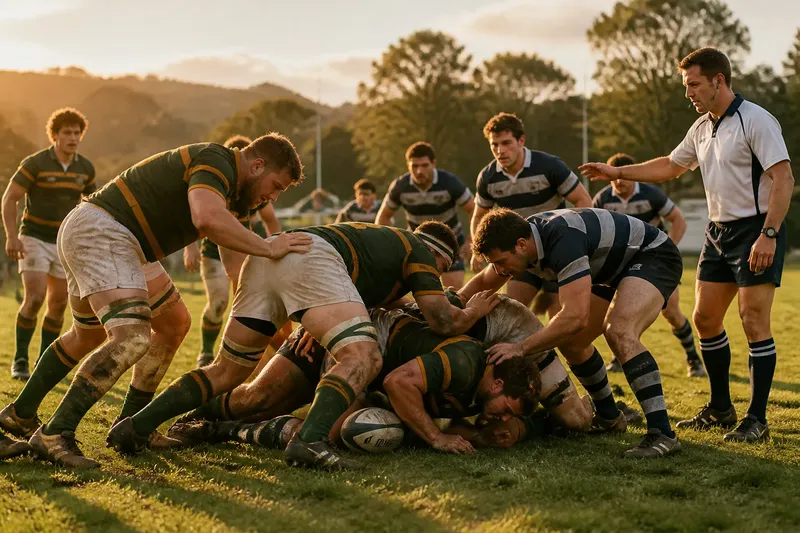
The referee blows after a knock-on, and the forwards begin binding together. Later, a kick sends the ball into touch, and players gather beside the sideline. These scenes help explain the difference between a scrum and a lineout: the stoppage and the referee’s decision determine the restart, not a team’s preference.
Both set pieces pause open play while players organize before the ball returns. A scrum forms around a ground-level contest; a lineout follows a touch-related stoppage and uses a throw. Knowing what happened before the whistle makes each easier to read.
Start with the stoppage
A lineout is one possible restart after the ball goes into touch. The precise decision depends on how it reached the boundary and the applicable laws, so the sideline alone does not tell the whole story.
A scrum is awarded for certain infringements and stoppages, including a forward pass or knock-on in situations where the laws call for one. Other outcomes can apply in particular circumstances. Listen for the referee’s decision and connect it to the event immediately before the whistle.
Begin with the reason play stopped; then check the referee’s signal.
Read the scrum shape
In a scrum, forwards bind together in opposing packs. The referee oversees the formation and engagement. Under the current standard scrum procedure, the scrum-half puts the ball into the scrum; the referee does not award a particular team the right to feed it.
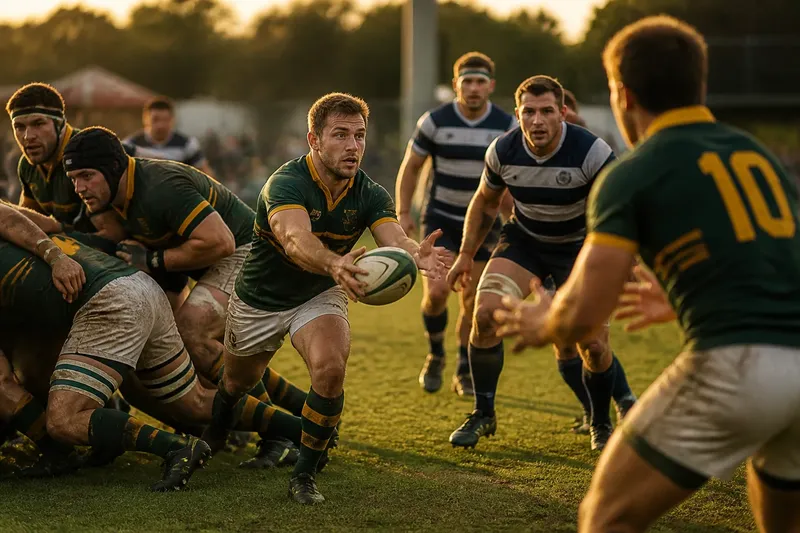
The ball travels into the space between the opposing front rows, and the teams contest it. Once it becomes available at the back, the scrum-half can pass it to a teammate, or the side can keep the ball close with a forward carry. The set piece does not dictate the next choice.
Watch the pack first, then follow the ball toward the back of the scrum.
Read the lineout shape
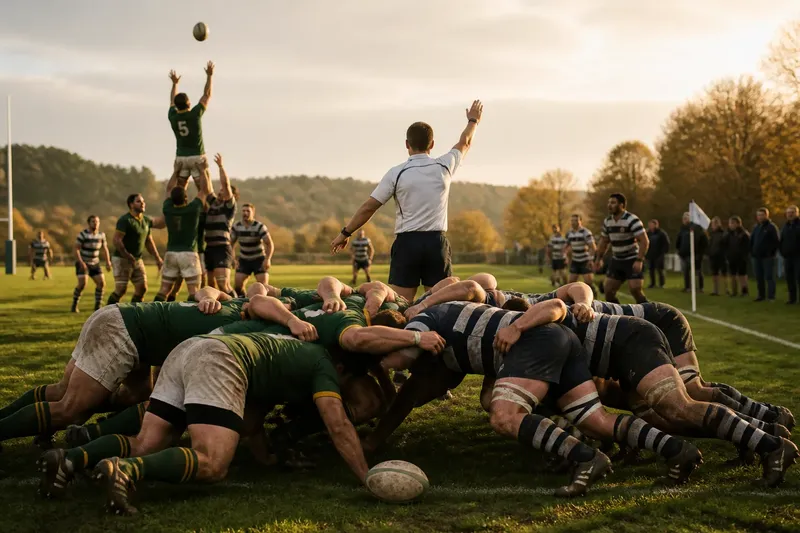
A lineout forms beside the touchline, with players from both teams arranged in lines. The team entitled to throw sends the ball into the space between them. Players may lift a teammate to contest the throw, while opponents can challenge within the laws.
The ball may be caught, tapped or disrupted. Once it leaves the lineout, watch how the teams reorganize and which side gets to play it next. The shape identifies the set piece, but it does not settle possession by itself.
Match the event and shape
Use the preceding event and the players’ arrangement together. These clues help you follow the decision without guessing from the shape alone.
- Play stops after a knock-on: Check the referee’s signal; if a scrum is awarded, follow the ball into the space between the packs, but if another decision is given, watch for that restart instead.
- A pass appears to travel forward: Wait for the whistle and signal; if the referee awards a scrum, track the pack, but if play continues, follow the ball rather than assuming a stoppage.
- The ball crosses the touchline: Watch for the referee’s decision; if a lineout is awarded, look for the throw and contest, but if another restart applies, follow the indicated formation.
- Players bind into opposing packs: Identify the scrum setup; if the ball enters the scrum, follow its movement toward the back, but if the setup changes, wait for the referee’s direction.
- Players arrange themselves beside the sideline: Look for a lineout; if the throw follows, track the contest, but if the referee signals another restart, use that signal to identify what comes next.
- The reason for the whistle is unclear: Check what happened immediately beforehand; if the referee’s signal clarifies the award, follow that set piece, but if it remains unclear, watch the formation rather than guessing.
Say a pass travels forward from a player’s hands and the referee stops play. If the referee signals a scrum, the packs form and the scrum-half puts the ball in; the viewer can then follow it toward the back. If a kick instead sends the ball into touch and a lineout is awarded, watch for the throw and the contest. The observable answer comes from both the signal and the formation.
What should you watch next?
Who puts the ball into a scrum?
The scrum-half introduces the ball after the scrum has formed under the applicable procedure. Watch for the ball entering between the opposing front rows, then follow it toward the back.
Does a lineout always follow a ball into touch?
Not necessarily; the way the ball reached touch and the applicable laws can affect the restart. Use the referee’s decision rather than treating every touchline exit alike.
Can either side contest a lineout?
Both teams can compete for the ball within the laws. The throw begins the contest, but the outcome depends on what happens after it is released.
How can I tell when open play resumes?
At a scrum, follow the ball as it becomes available behind the pack. At a lineout, track the throw through the catch or contest and watch which players next carry or pass it.
Two distinct restarts
A scrum brings forwards into a bound contest around a ball introduced at ground level. A lineout returns play beside the touchline through a throw that can be contested in the air. Neither is a free choice for a team: the referee awards the restart under the laws.
For a quick read of scrum or lineout, connect the stoppage to the referee’s signal, then use the formation to follow the ball. That habit keeps the focus on what the rules and players actually do, rather than on assumptions about which side should have possession.