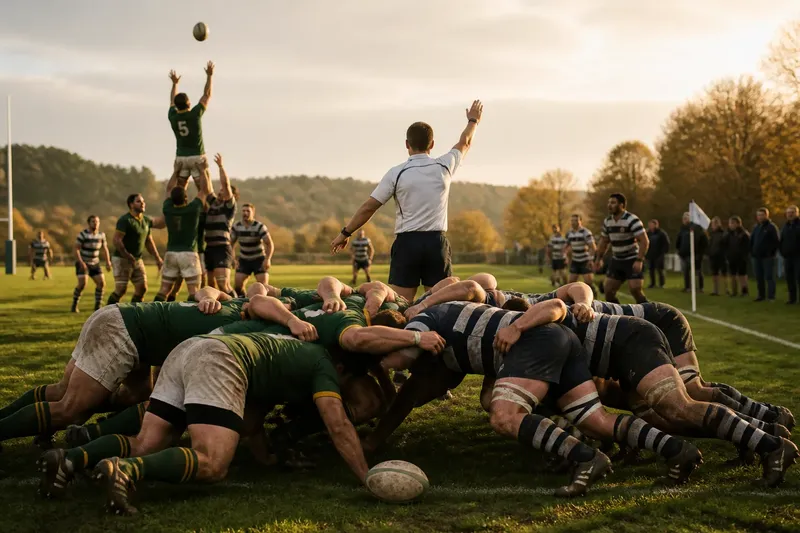
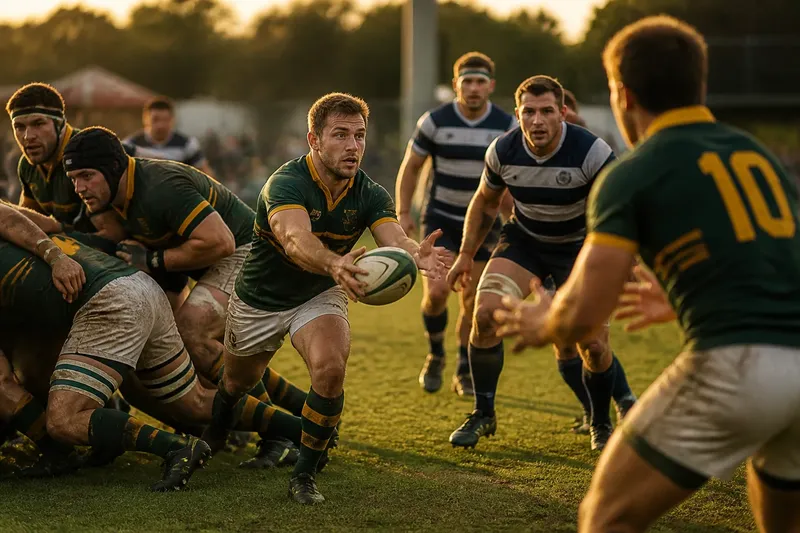
Reading a Rugby Ruck Without Guessing the Laws
Understand a rugby ruck by tracking how it forms, what the ball carrier may do, and how possession changes—without mistaking a tackle for a ruck.
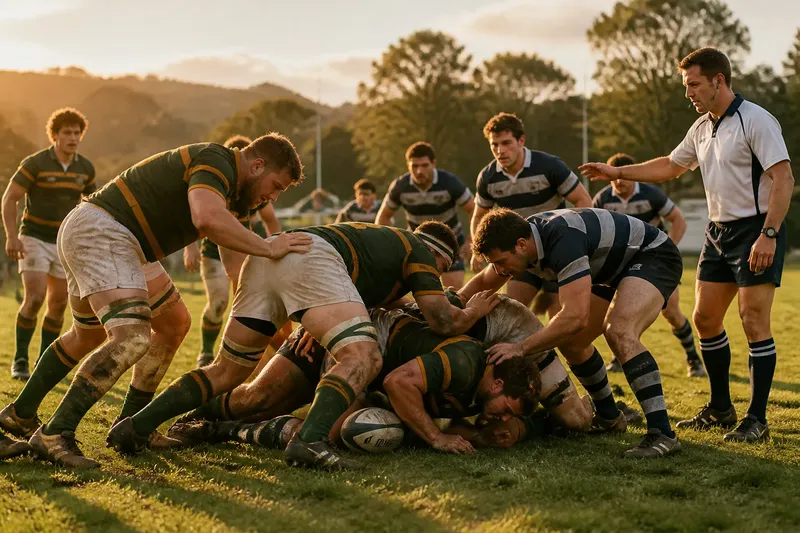
The carrier hits the turf, a teammate steps over the ball, and the referee keeps play moving. To read a rugby ruck, start by separating what you can see from what you cannot safely assume: the bodies may show a contest, but the exact legal ruling depends on how it formed and what each player did.
Recognize the ruck
Under rugby’s laws, a ruck forms when at least one player from each team is in contact, on their feet, over the ball on the ground. The ball is then in the ruck. Players must join from behind their own team’s offside line, and they must bind onto a teammate or an opponent as the laws require. The full requirements are technical, so avoid treating any player who steps over the ball as automatically legal.
That distinction matters because a tackle and a ruck are different phases. At a tackle, the tackled player must release the ball, and other players have obligations of their own. Once a ruck has formed, players generally may not use their hands to play the ball while it remains in the ruck. A ball that has emerged or is otherwise outside it can present a different situation.
As a viewer, note the sequence: tackle, arriving players, contact over the grounded ball, then the referee’s decision. If a specific ruling matters, check the current law wording and competition guidance rather than relying on a quick visual impression.
Track possession
Possession at a ruck is not always obvious. One team may keep players over the ball while a teammate waits behind them to retrieve it. The other team may press without taking possession. The useful question is what happens next: does a player play the ball, does it come free, or does the referee stop the match?
A team can retain the ball without gaining a clean attacking opportunity. Its players may be crowded or pushed away from their preferred direction. Conversely, a defense can disrupt the attack without winning the ball. Treat “won” and “lost” as shorthand, not as a complete account of the phase.
Say an invented team is attacking toward the right touchline. Its carrier is tackled, and a teammate arrives behind the ball; after a ruck forms, the ball becomes available at the back. If the scrum-half can play it, the team may pass right again. If defenders have closed that route, the scrum-half may instead carry, kick, or wait for another option. The visible result is the next action, not proof that one choice was inevitable.
Read the breakdown
The breakdown is the contest around the tackle and any ruck that follows. Rather than trying to diagnose every body position from a distant view, track a few observable events:
- If the ball carrier is tackled and releases the ball, watch whether another player arrives before an opponent can play it; if a ruck forms, treat the ball as part of that ruck, otherwise keep watching the tackle phase.
- If players are on their feet and in contact over the grounded ball, note that a ruck may have formed; if the required conditions are unclear, wait for the referee’s signal instead of declaring a penalty.
- If a player reaches down while the ball appears trapped in a formed ruck, watch for the referee’s decision; if play continues, do not assume the action was legal merely from a distant view.
- If the ball rolls clear of the contest, follow who gathers it; if no one can play it cleanly, watch for a whistle or another phase rather than calling a turnover at once.
- If the referee stops play, look for the signal and the direction of the decision; if you cannot identify the infringement, record the event as a stoppage instead of guessing at the law.
- If the ball is available behind the contest, watch who plays it and where the pass, carry, or kick goes; if the player pauses, treat that as a choice in the moment, not evidence that the ball was unavailable.
These checks help you describe the sequence without turning an uncertain angle into a confident law ruling.
Follow the ball out
The ball’s route out of a ruck tells you more about the phase than a general glance at the crowd around it. Watch whether it is played by a teammate at the back, picked up after it has left the ruck, or left for the referee to resolve. Then identify the next action: pass, carry, kick, whistle, or a loose-ball contest.
This focus also keeps the reading distinct from a broad scan of the field. You do not need to map every defender or predict where space will open. Follow the ball’s legal availability and the player who acts on it; that is enough to understand how the breakdown ends.
Rugby ruck questions?
Can a player pick up the ball in a ruck?
Players generally cannot use their hands to play the ball while it remains in a formed ruck. If the ball has left the ruck, the situation may be different; the referee’s ruling and the applicable laws determine the call.
Does standing over the ball mean a team has possession?
Not by itself. A player’s position can suggest which team may be able to play the ball, but the ball’s location, the phase, and the referee’s decision matter too.
Why might the referee whistle at a ruck?
A whistle can stop play for an infringement or because the ball cannot be played, among other reasons. Watch the referee’s signal and restart direction; do not assume the nearest team has won possession.
How can I tell whether a ruck has formed?
Look for the ball on the ground and at least one player from each team in contact, on their feet, over it. If bodies obscure the contact or the sequence, treat the call as uncertain and follow the referee.
Keep the sequence clear
For a useful read of a rugby ruck, track the tackle, the arrival of players, whether the ruck forms, and how the ball leaves the contest. Use the referee’s signal when the legal decision is unclear. This approach gives you a sound account of the phase without guessing at a technical ruling or shifting attention to unrelated patterns elsewhere on the field.
One practical habit helps on a crowded broadcast angle: name only what you can see—“tackle,” “players over the ball,” “ball played,” or “whistle”—before deciding what it means. That small pause keeps your reading accurate and makes the next phase easier to follow.